You touch more microbes before breakfast than you'll ever see.
Project Protect is a weekly breakdown of the bacteria, viruses, and parasites you brush up against in daily life — where they hide, what they can do, and the simple habits that keep you safe.
Health knowledge shouldn't require a science degree.
“Prevention only works if people actually understand what they're preventing.”
Most people go their whole life without knowing where a stomach bug actually came from, or why rinsing produce under the tap doesn't always work. Project Protect exists to close that gap, one organism at a time.
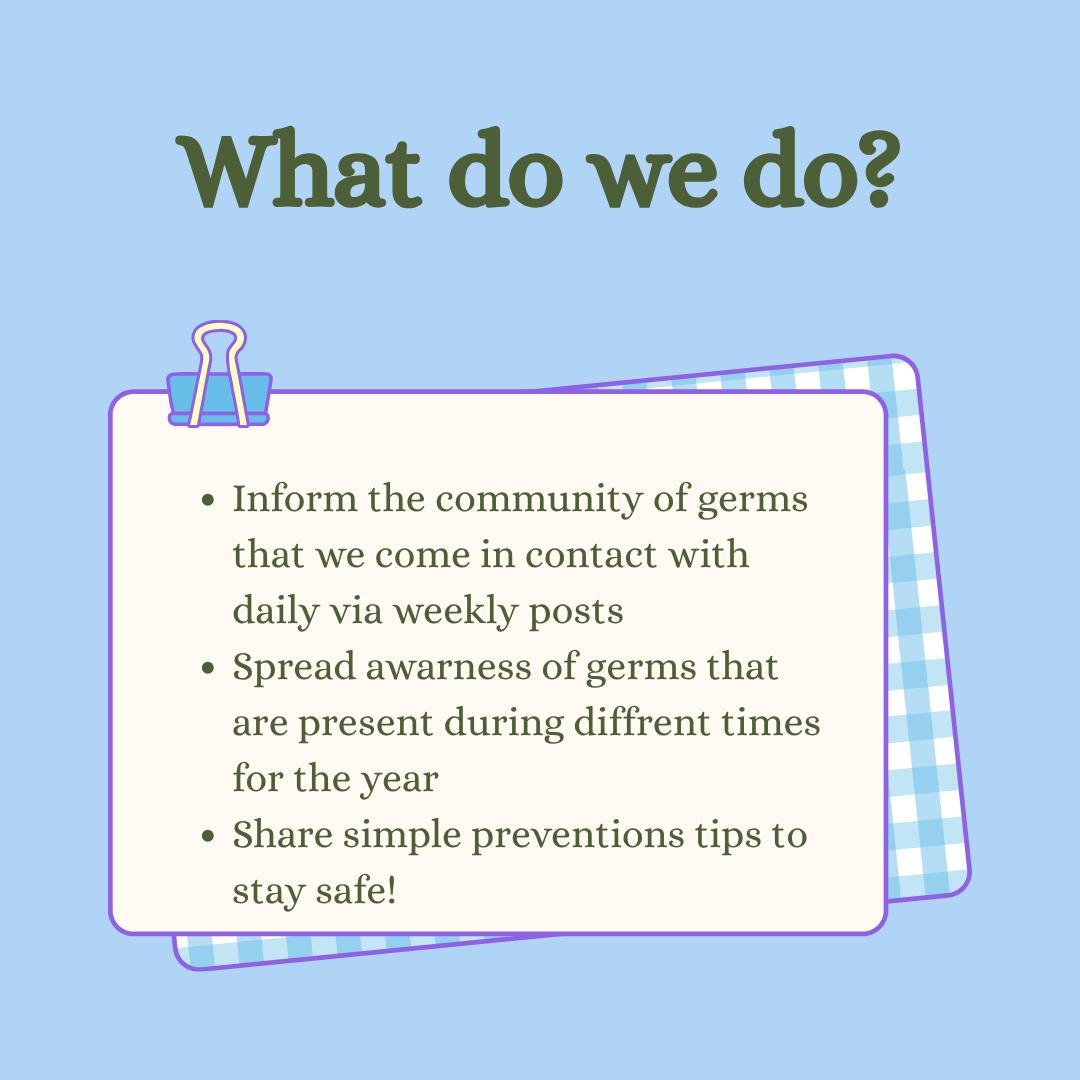
Every week, we pick a single bacteria, virus, or parasite that people realistically encounter — in food, water, soil, or on everyday surfaces — and break it down in plain language: where it's found, what it does to your body, and what you can actually do about it.
Researched and written independently by the founder, published weekly on Instagram and TikTok.
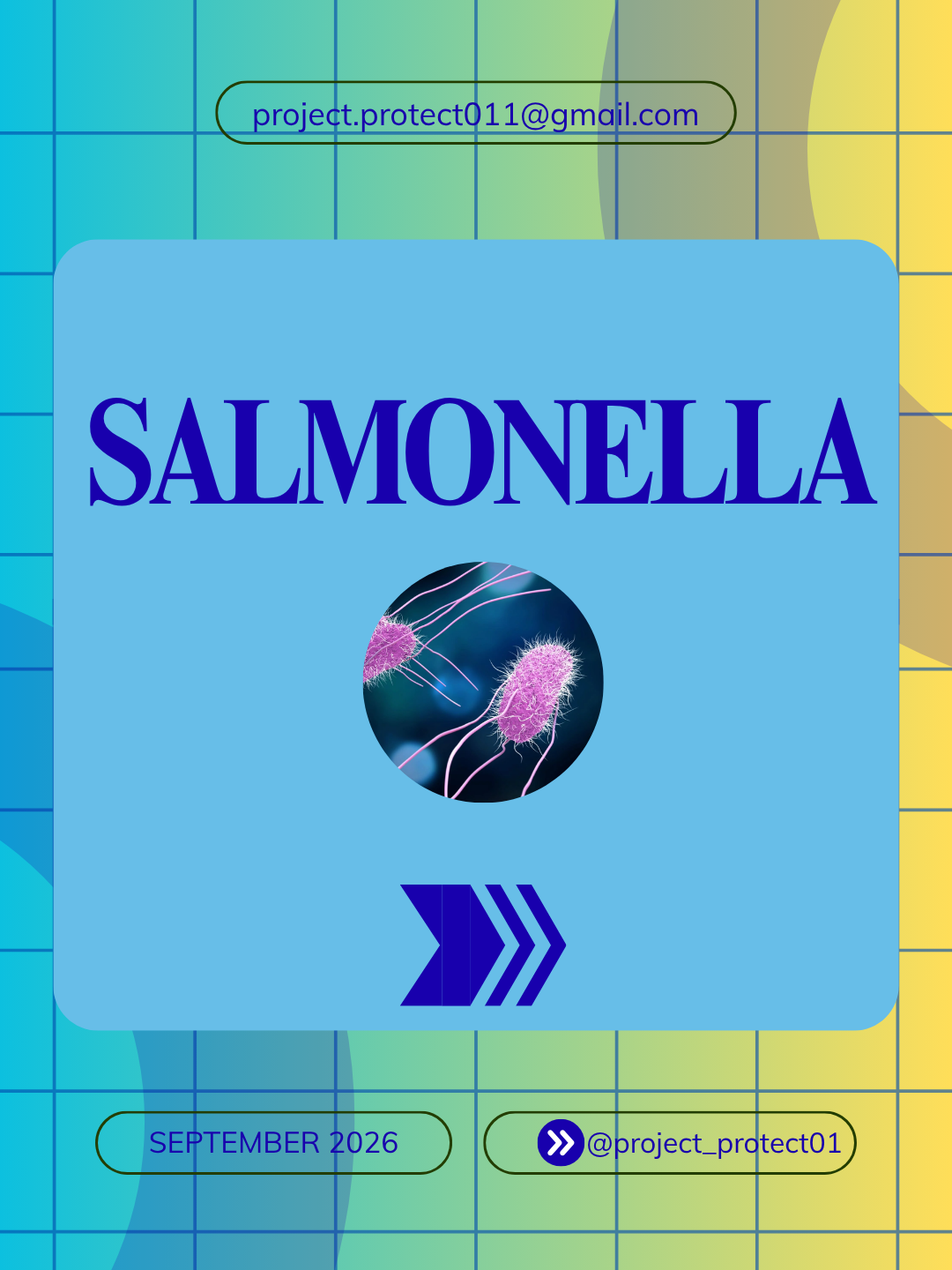
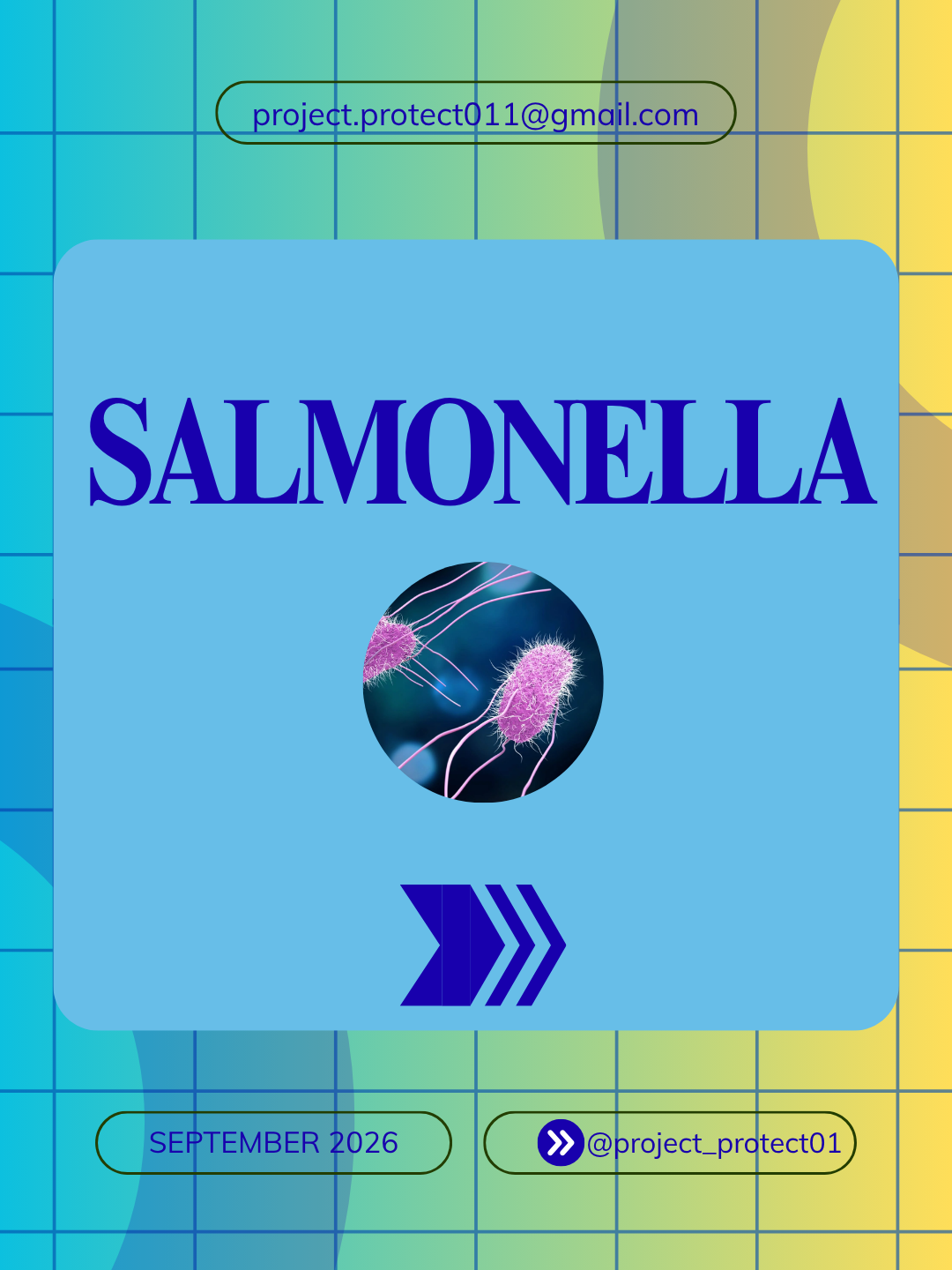
Salmonella
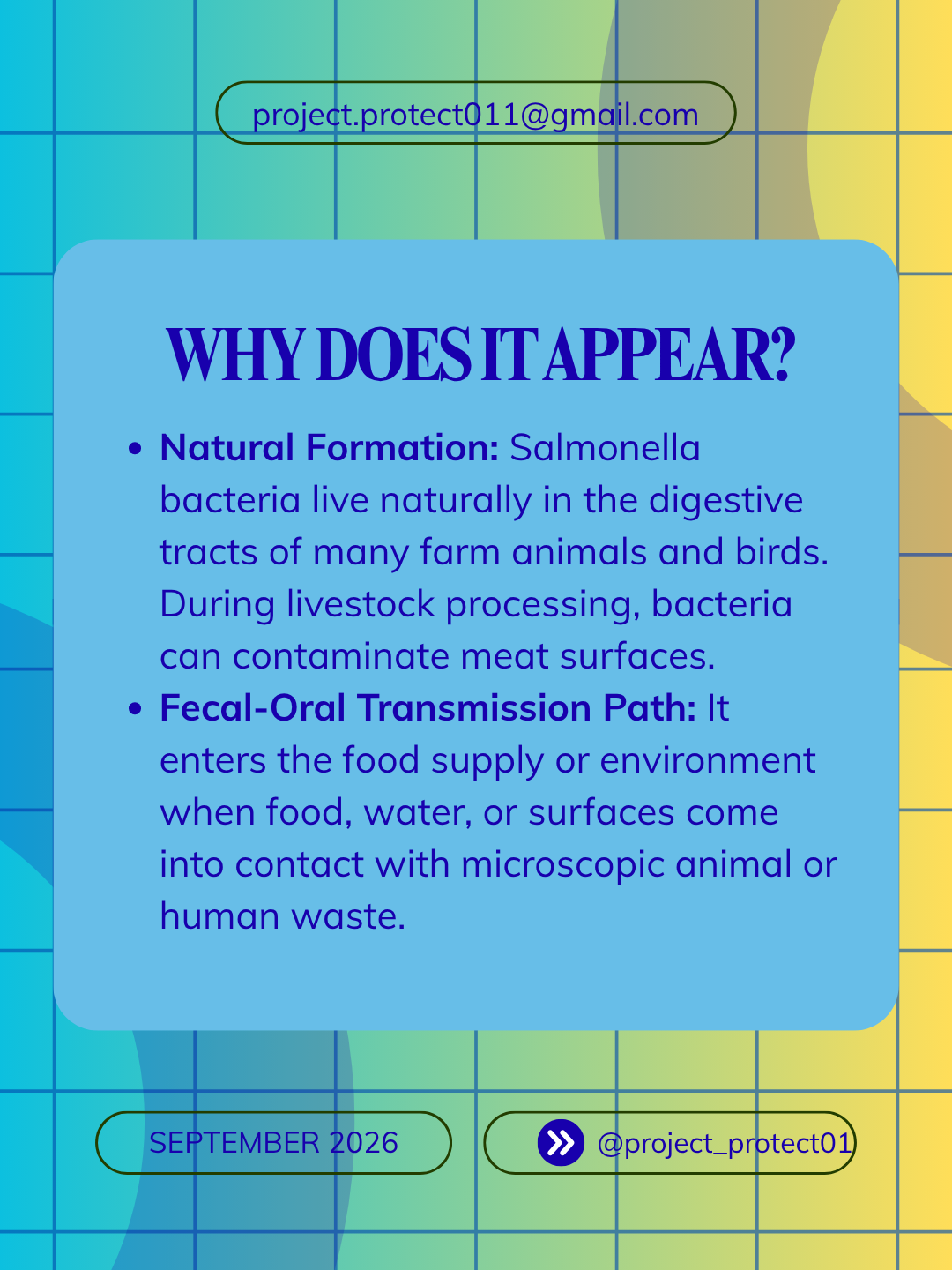
A resilient foodborne bacterium that can move from animals and contaminated environments into the foods and surfaces we use every day.
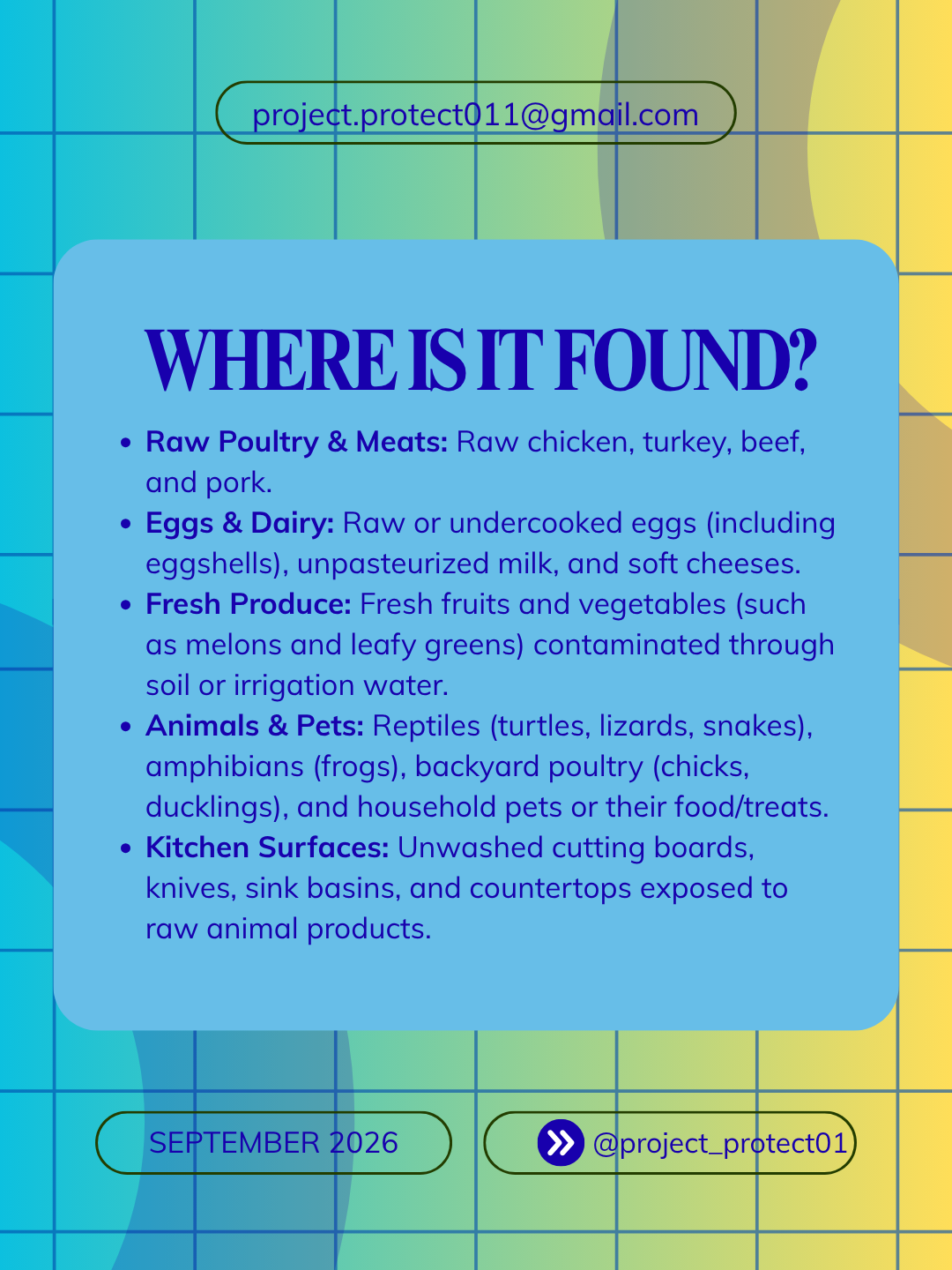
Where it's found
- Raw poultry and meats: chicken, turkey, beef, and pork can carry it.
- Eggs and dairy: raw or undercooked eggs, including eggshells, plus unpasteurized milk and soft cheeses.
- Produce and water: fresh fruits and vegetables can be contaminated through soil, irrigation water, or animal waste.
- Animals and kitchens: reptiles, backyard poultry, cutting boards, knives, sinks, and countertops can all spread it.
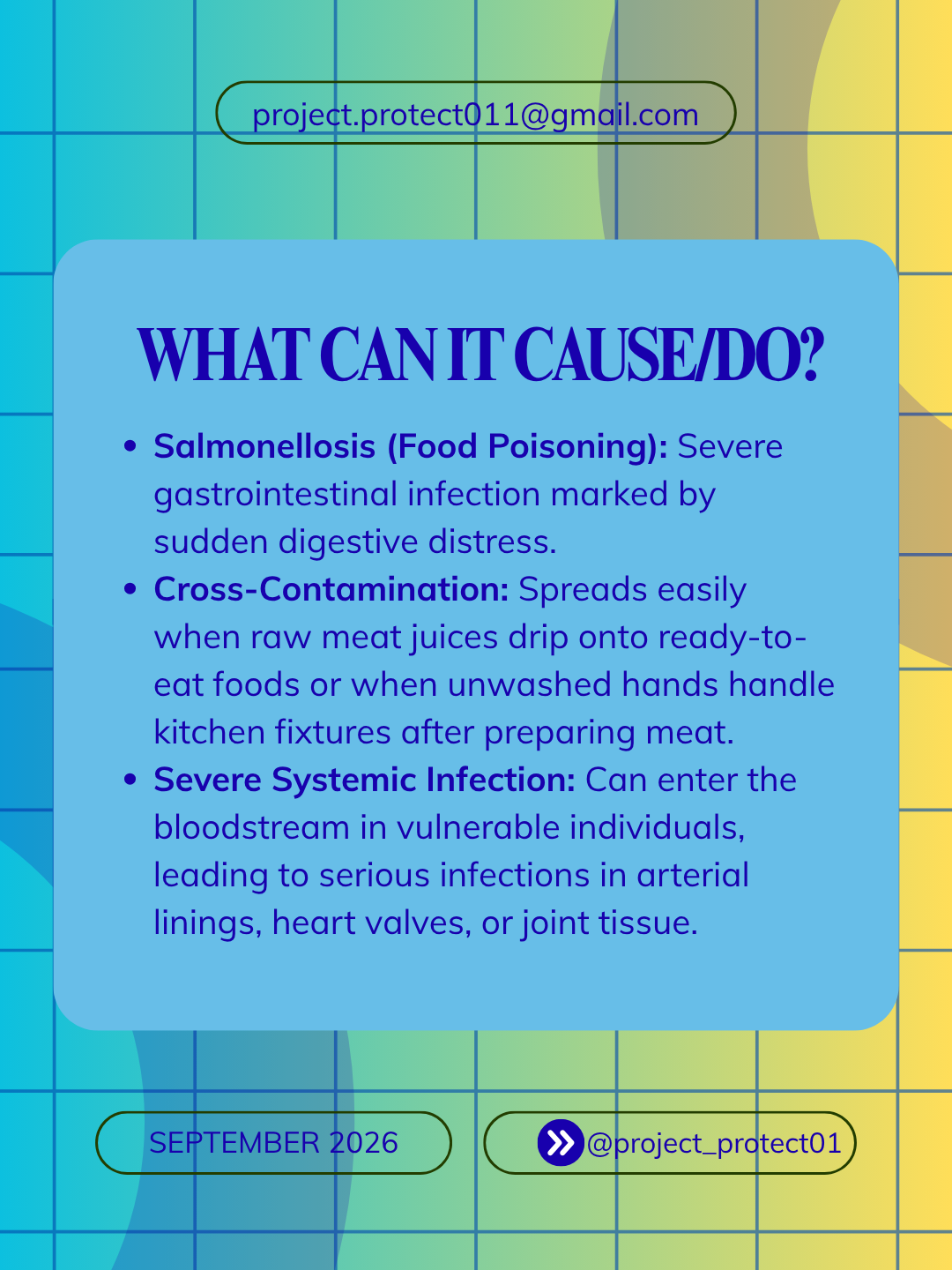
What it can cause
- Salmonellosis: a gastrointestinal infection marked by sudden diarrhea, fever, and abdominal cramps.
- Cross-contamination: raw-meat juices or unwashed hands can transfer the bacteria to ready-to-eat foods.
- Invasive infection: in vulnerable people, Salmonella can enter the bloodstream and infect arteries, heart valves, or joints.
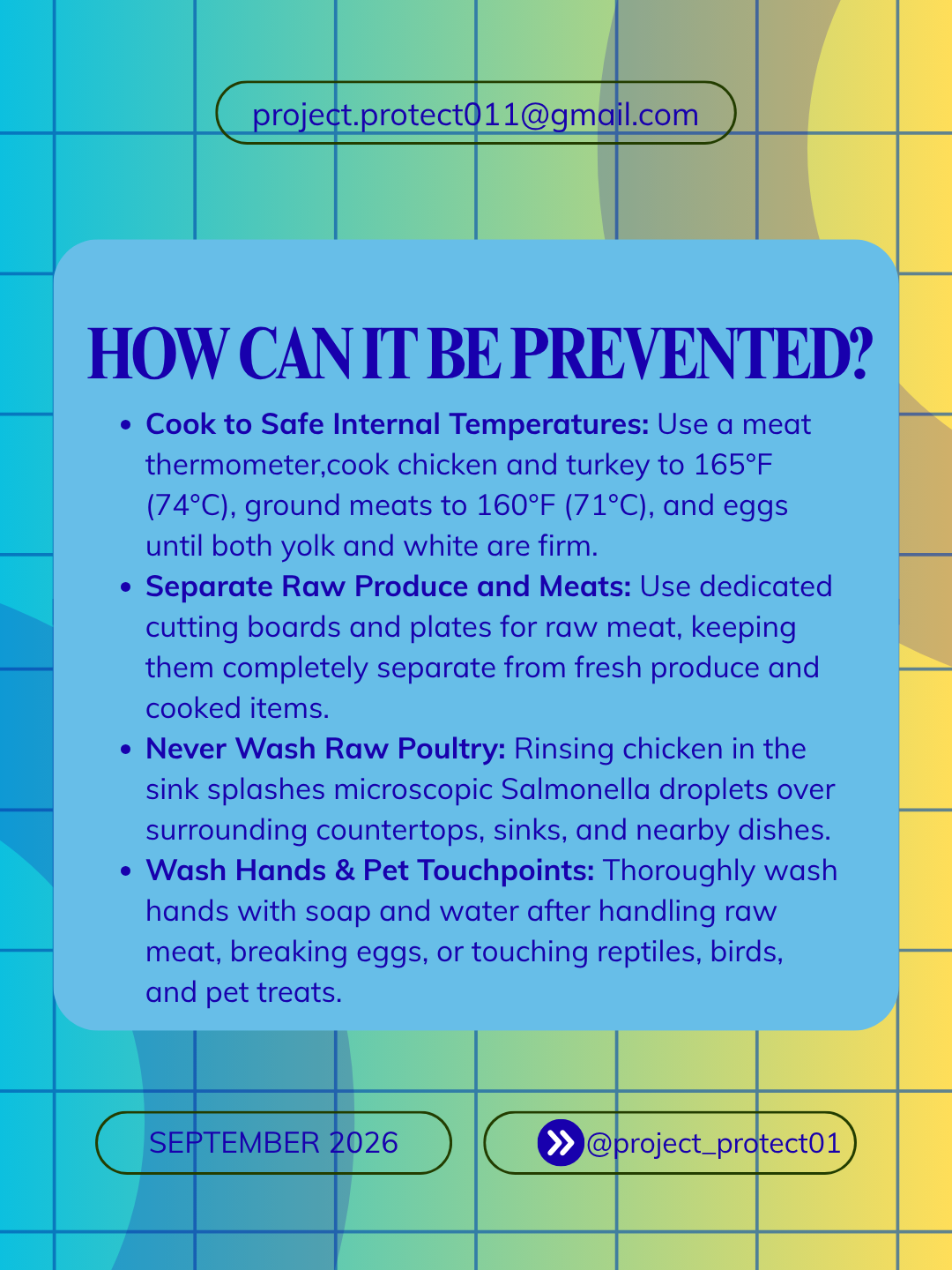
How it's prevented
- Cook to safe temperatures: use a meat thermometer and cook chicken and turkey to 165°F (74°C) and ground meats to 160°F (71°C).
- Separate raw foods: use dedicated cutting boards and plates, and keep raw meat away from produce and cooked foods.
- Clean thoroughly: wash hands for 20 seconds and sanitize counters, utensils, and sinks after handling raw meat or eggs.
- Rinse produce: wash fruits and vegetables under running water before eating or preparing them.
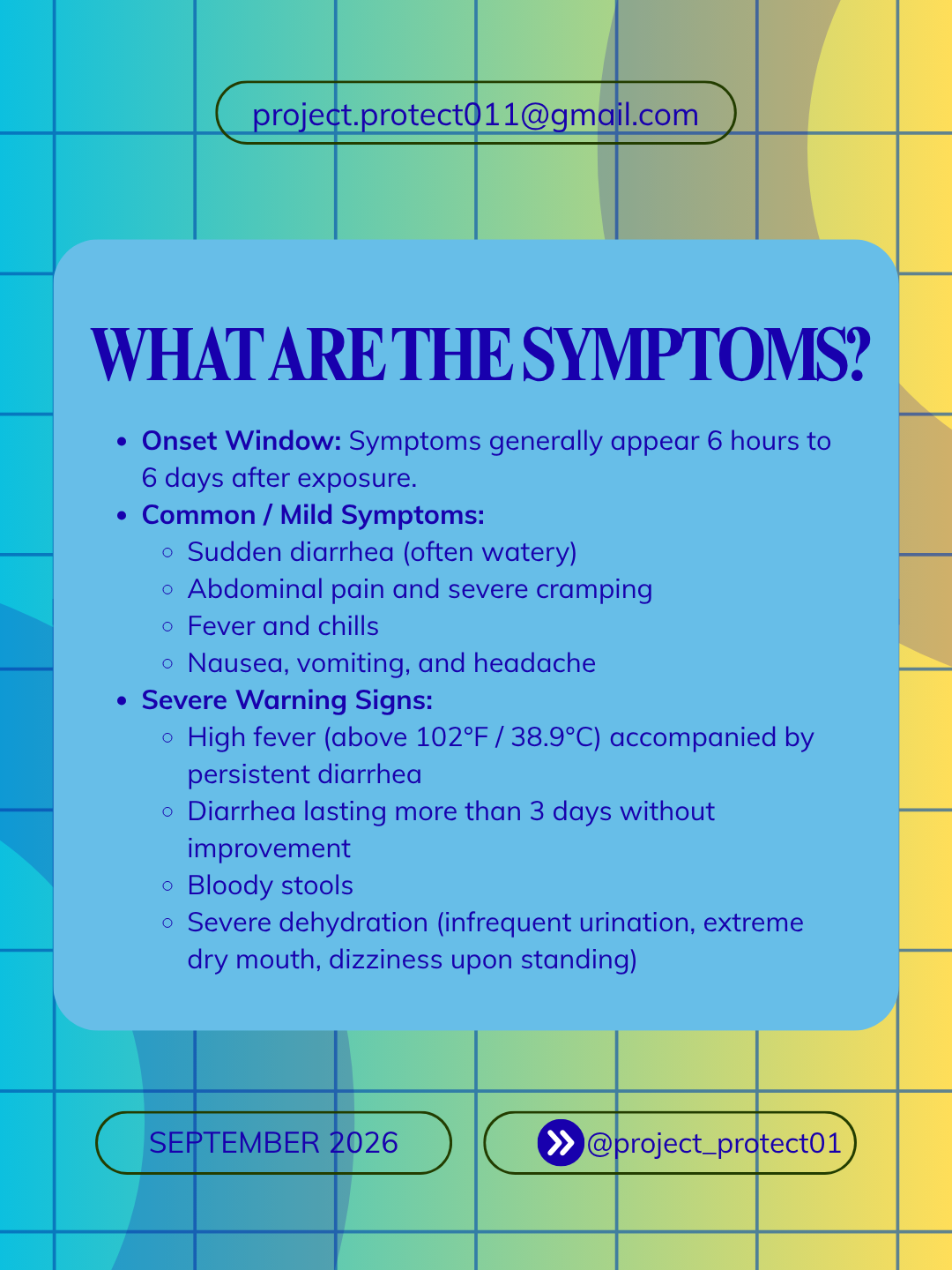
Good to know
- Symptoms usually begin within 6 days: many cases resolve in 4–7 days, though dehydration or bloody stools need medical attention.
- Highly persistent: some strains are increasingly antibiotic-resistant, and the bacteria can survive for weeks on dry surfaces and months in moist soil or water.
- Widespread: Salmonella is one of the leading causes of foodborne illness worldwide, with about 1.35 million U.S. infections each year.
This is one topic out of dozens. A new one goes up every week — follow along so you don't miss it.
Our publications
Each weekly post is its own deep dive — browse past publications below, slide by slide.
About Project Protect
Meet Project Protect, learn why it exists, and see how we turn microbial science into practical health knowledge.
Salmonella
Where Salmonella is found, how it spreads, the illness it can cause, and practical ways to prevent infection.
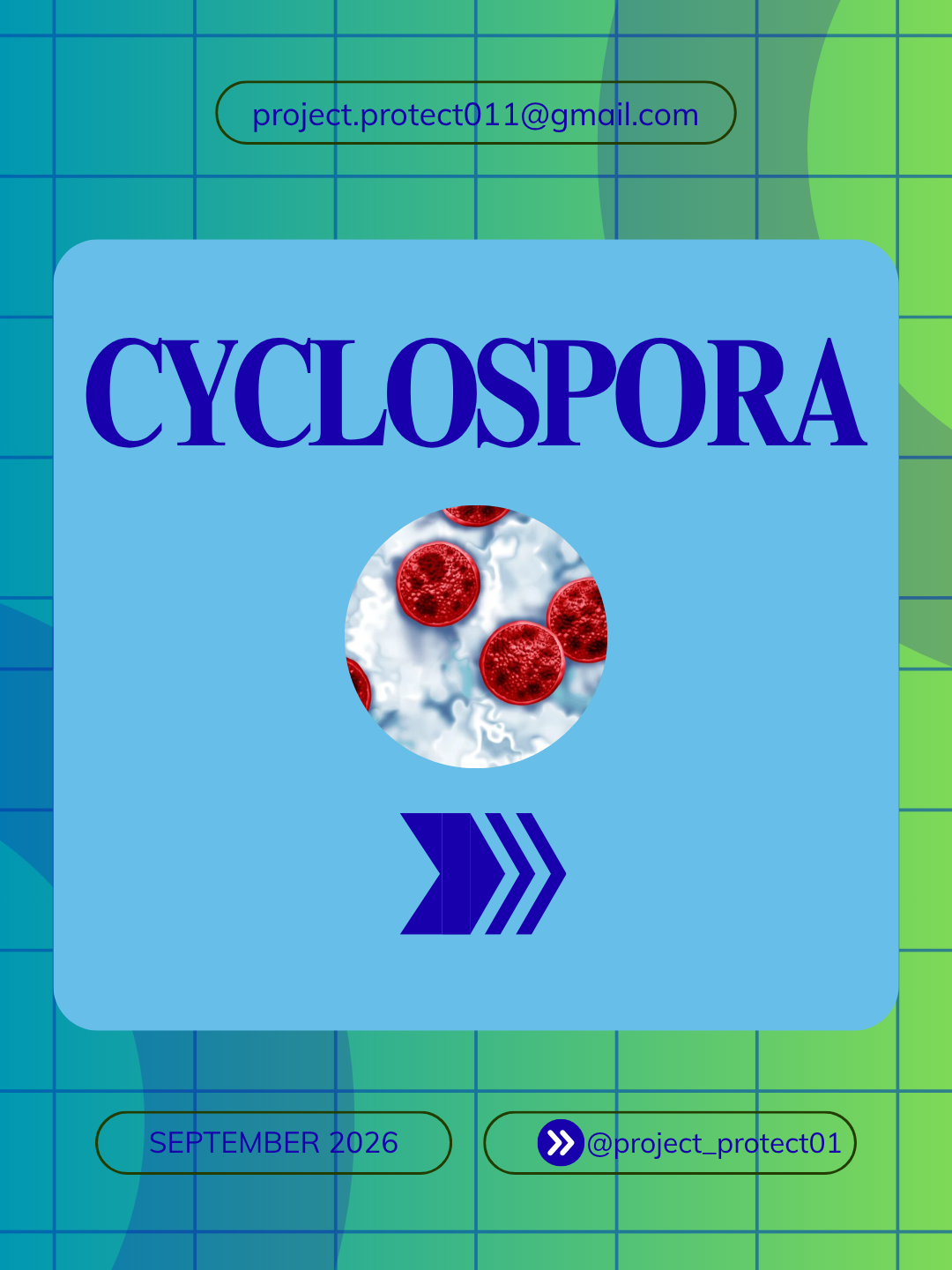
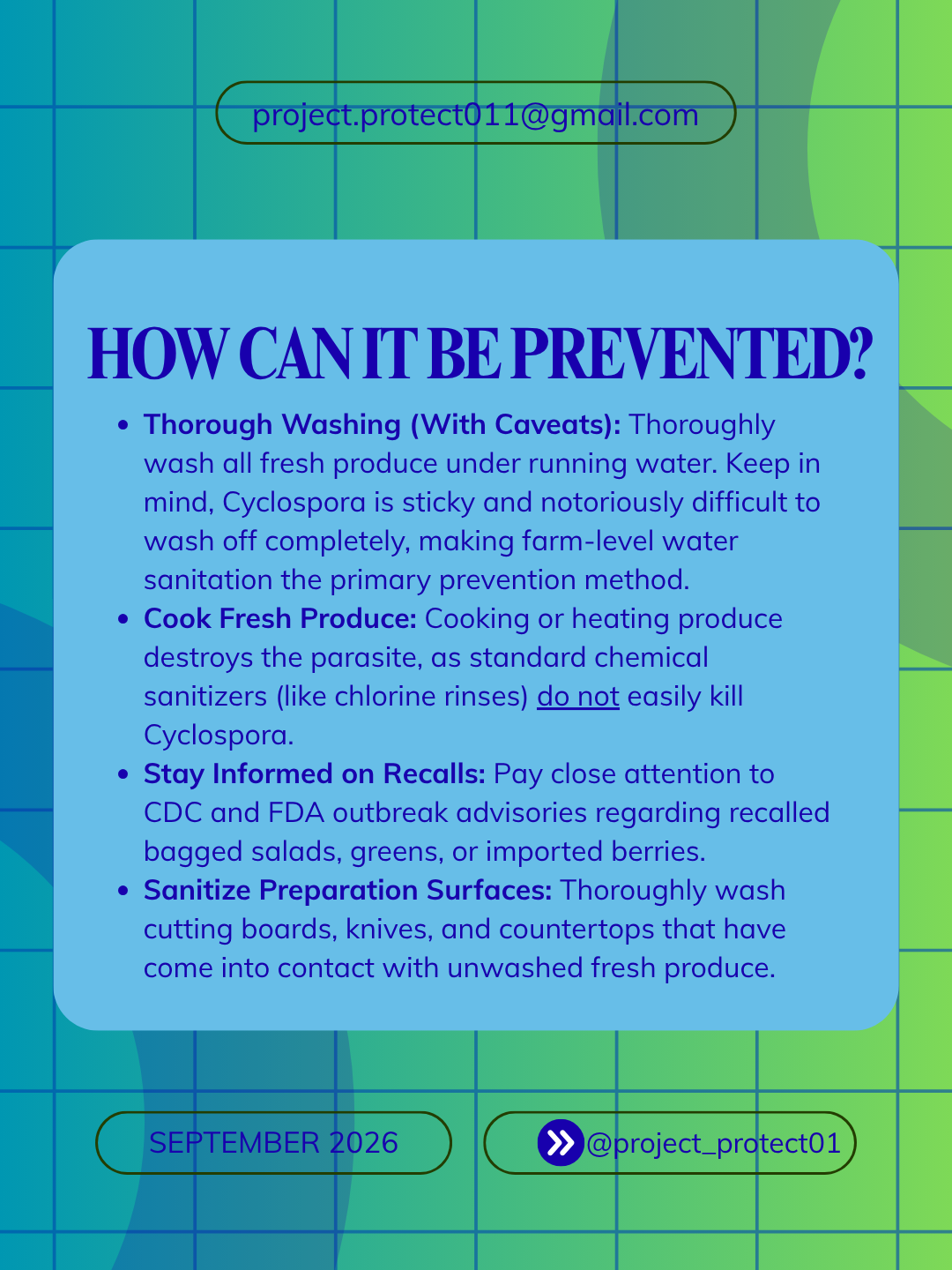
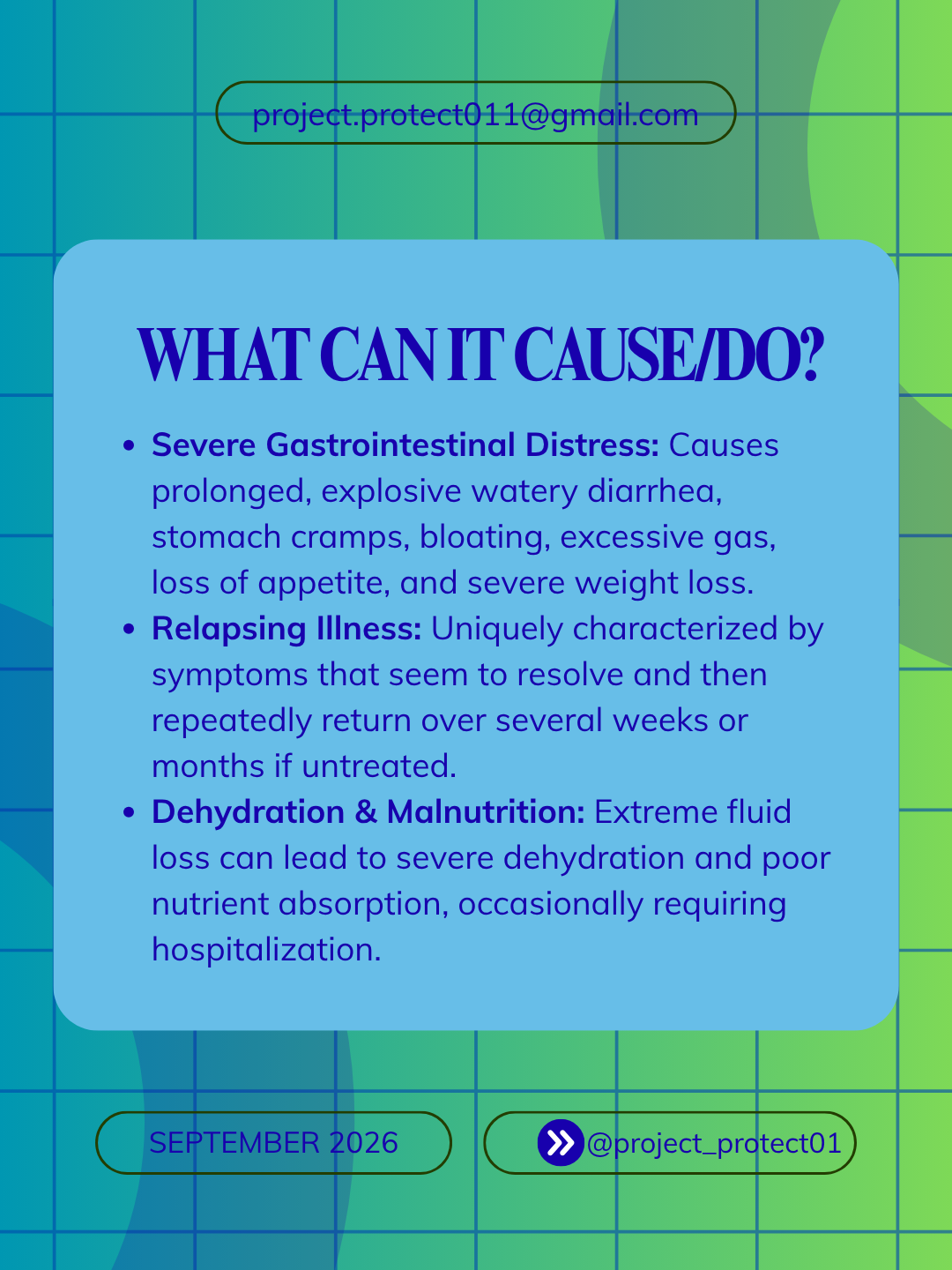
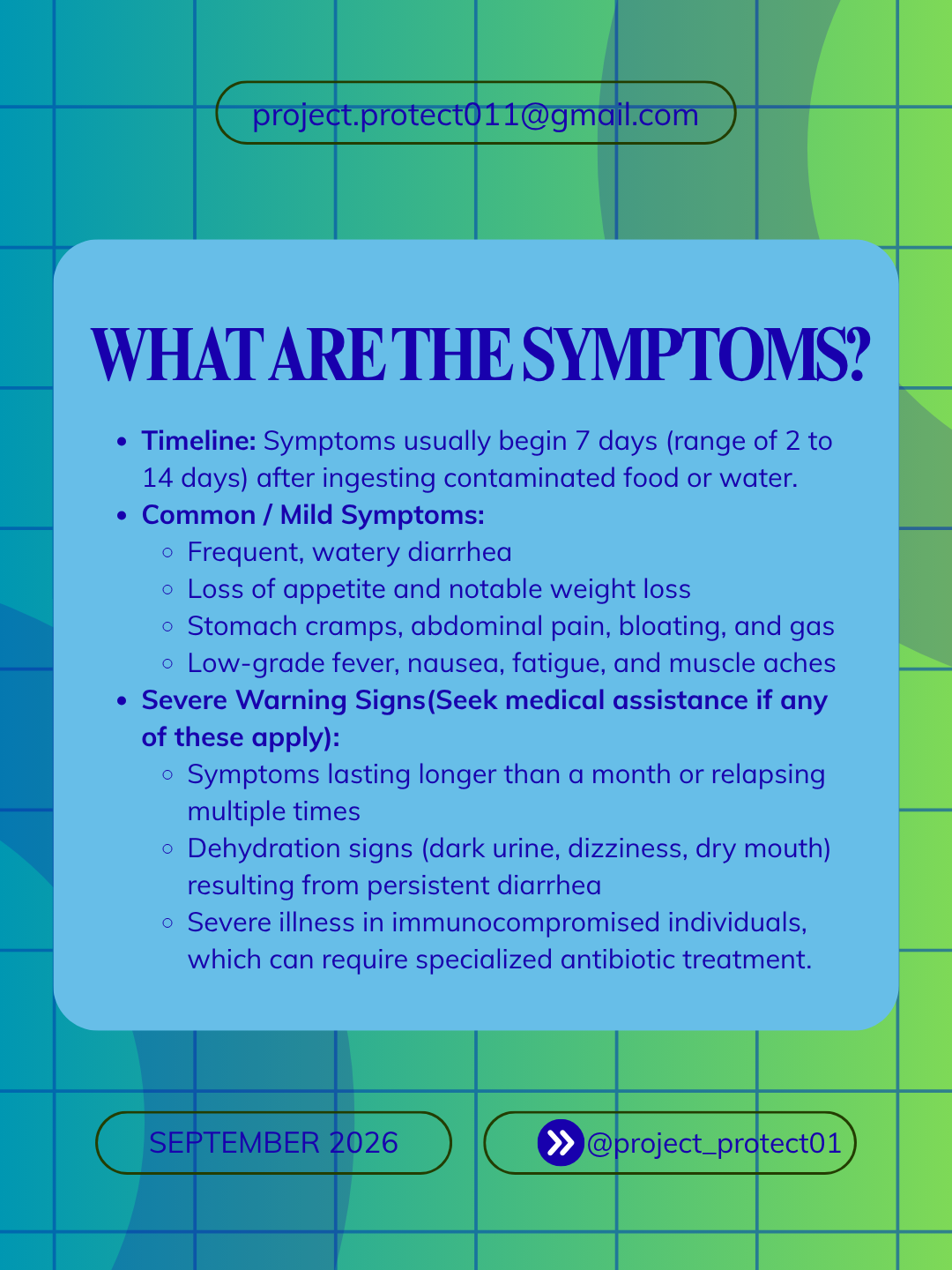
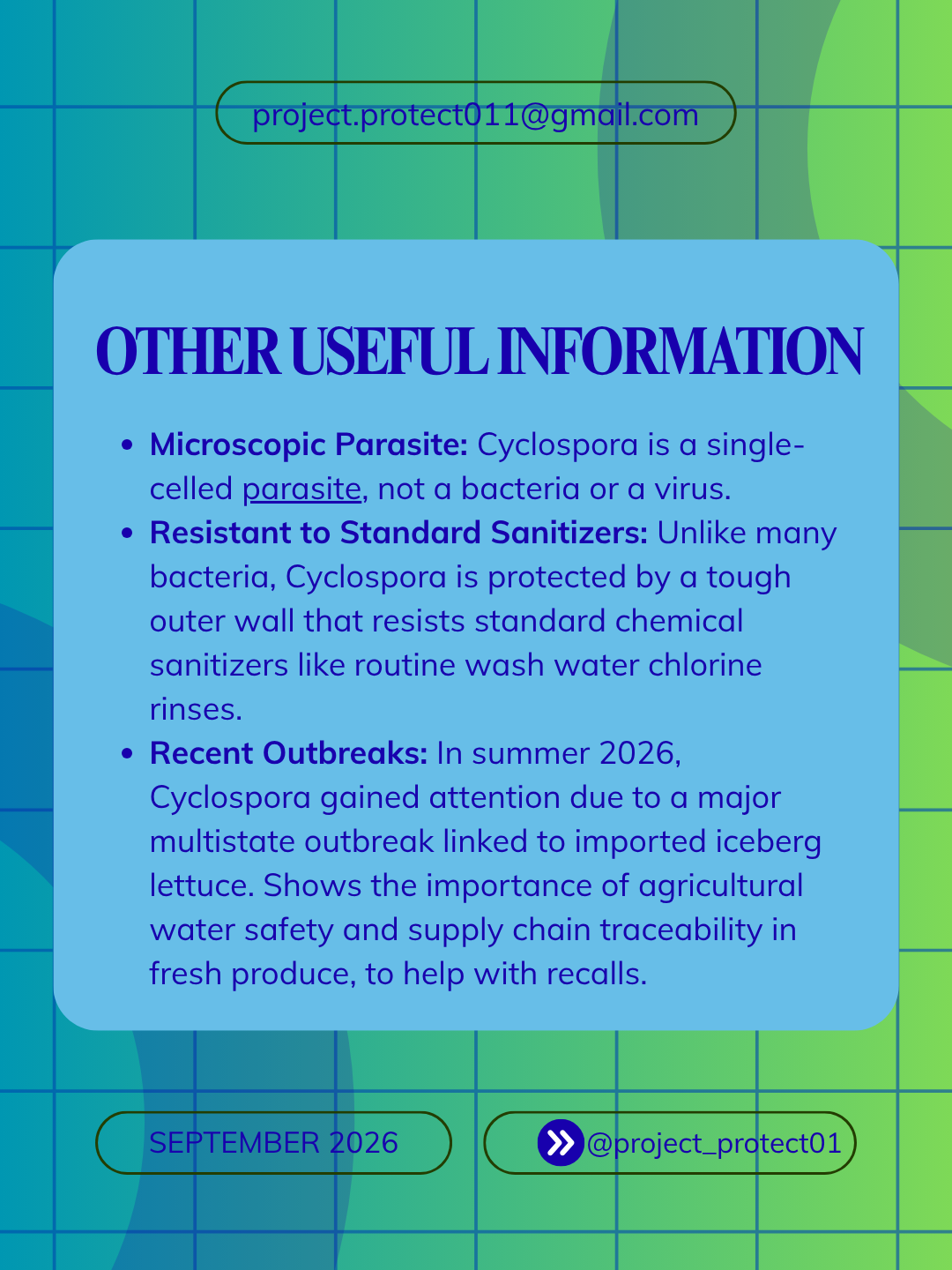
Cyclospora
Where Cyclospora hides, what it does, and how to help prevent it.
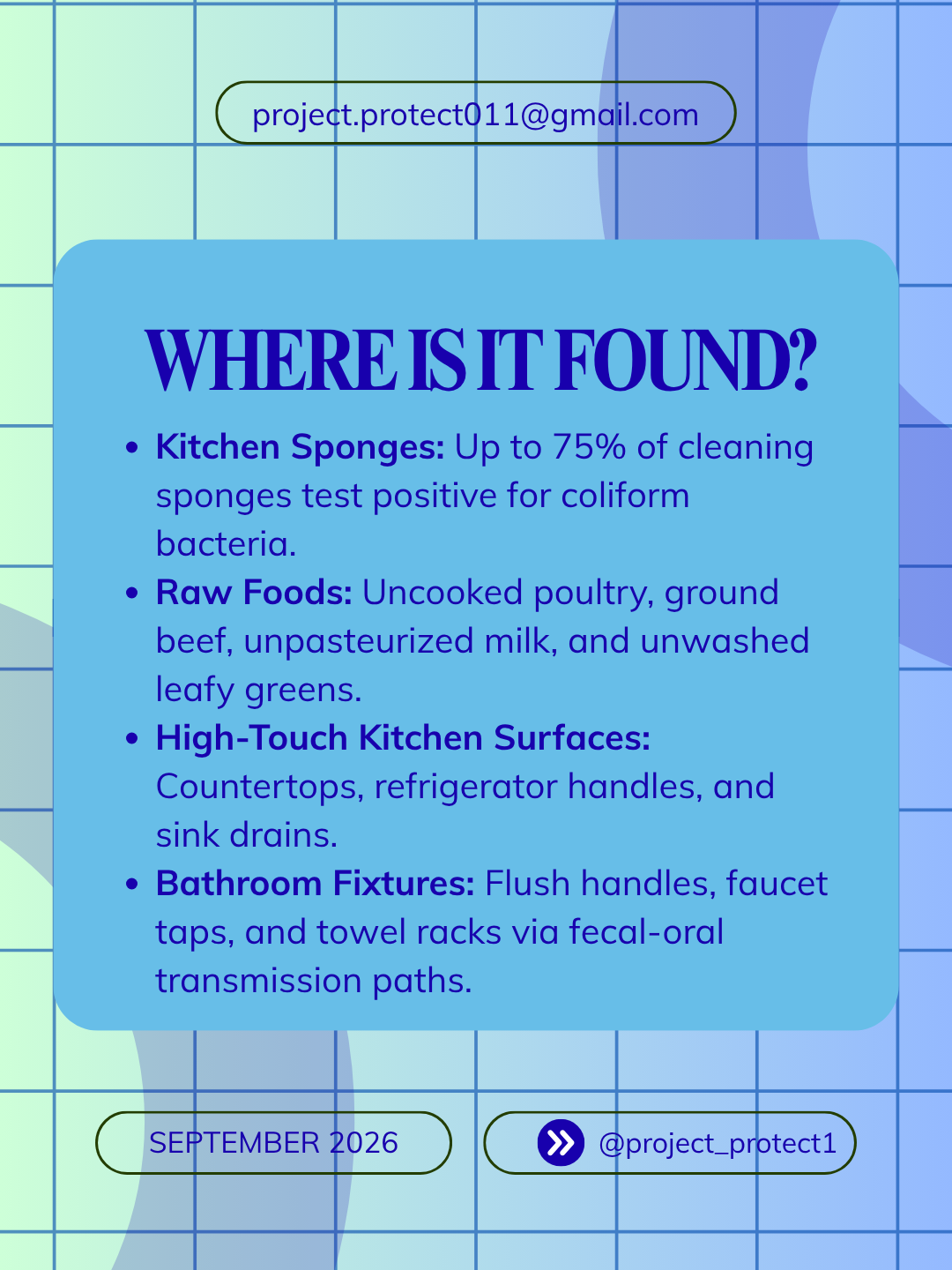
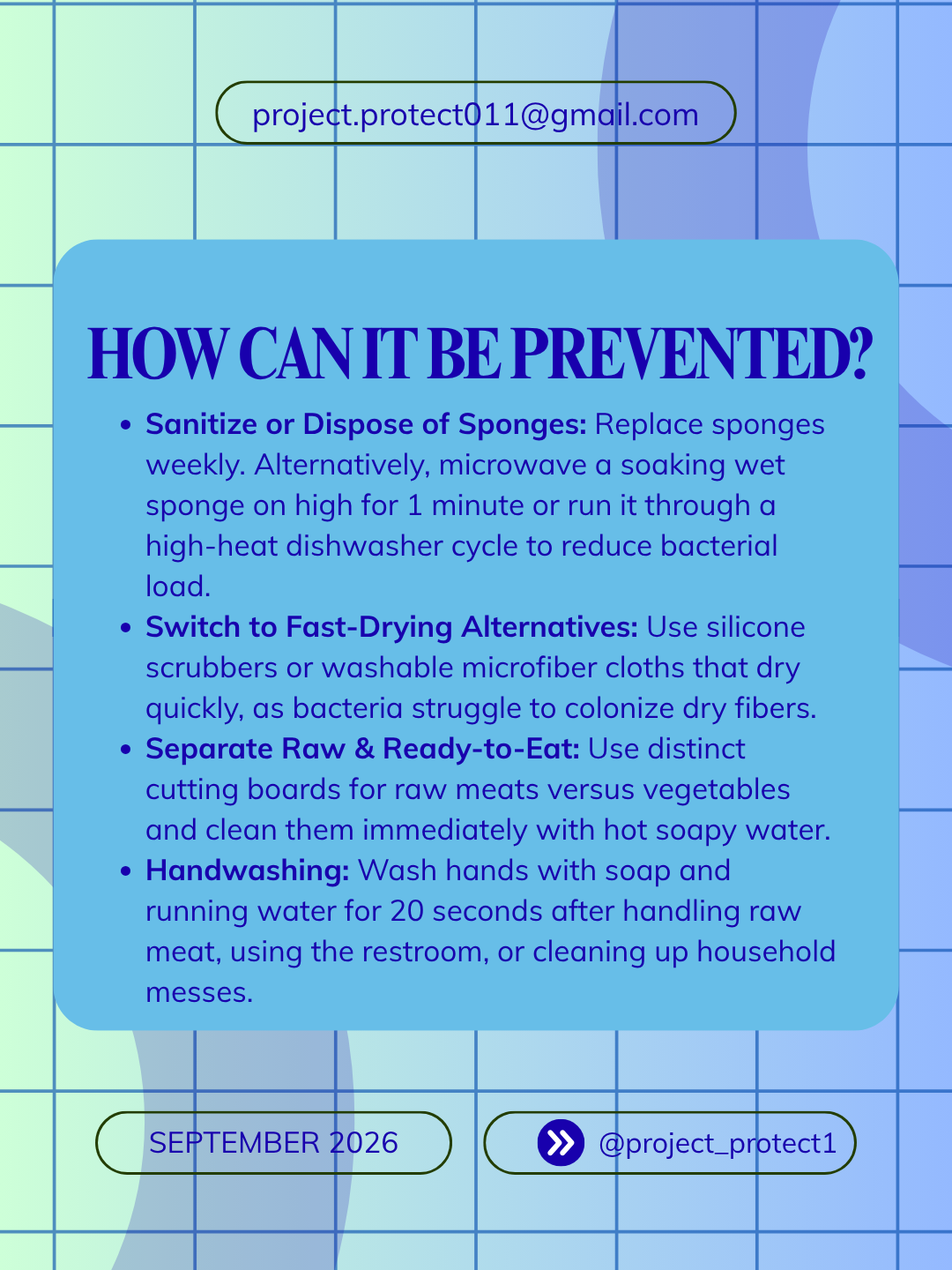
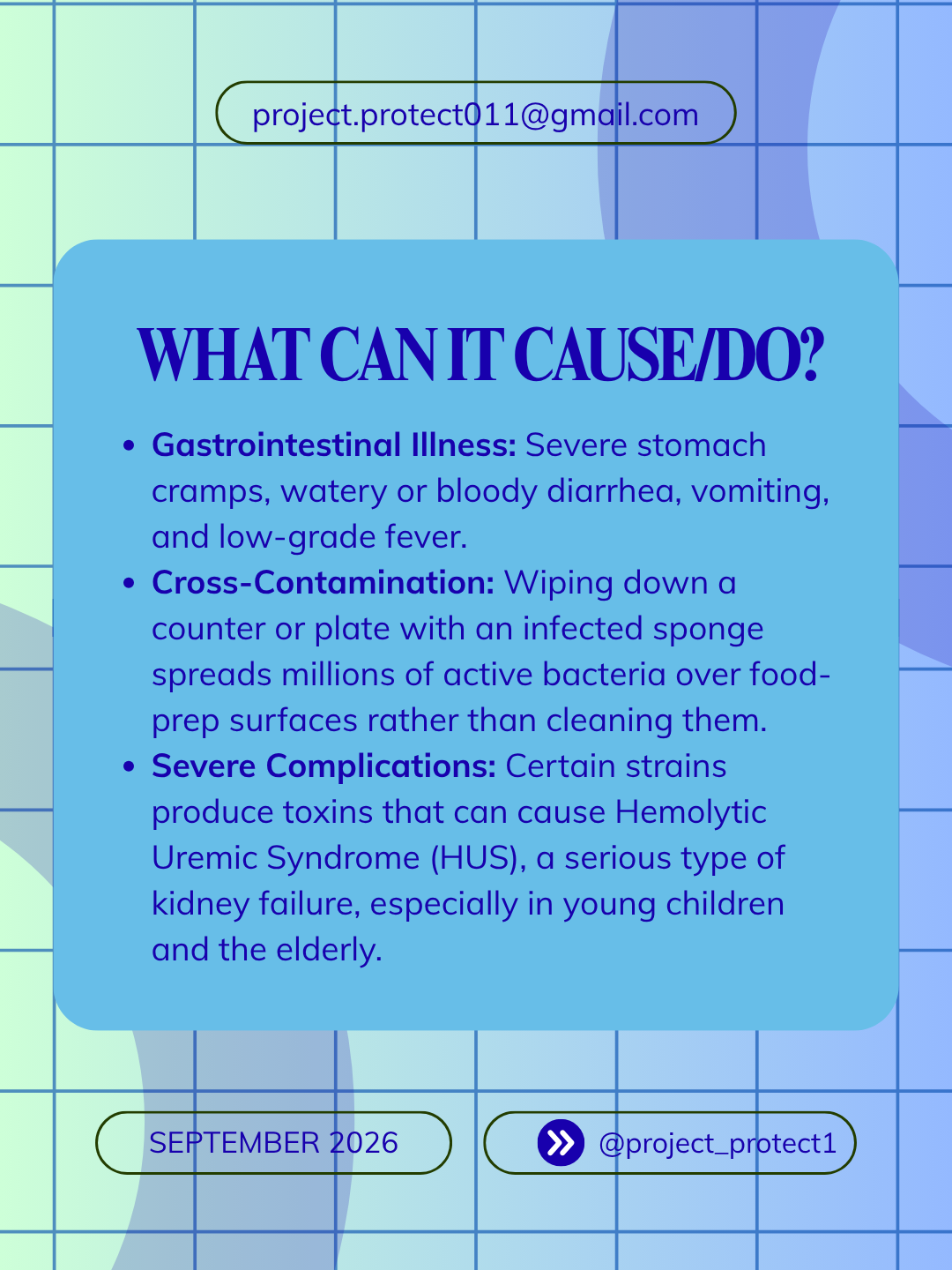
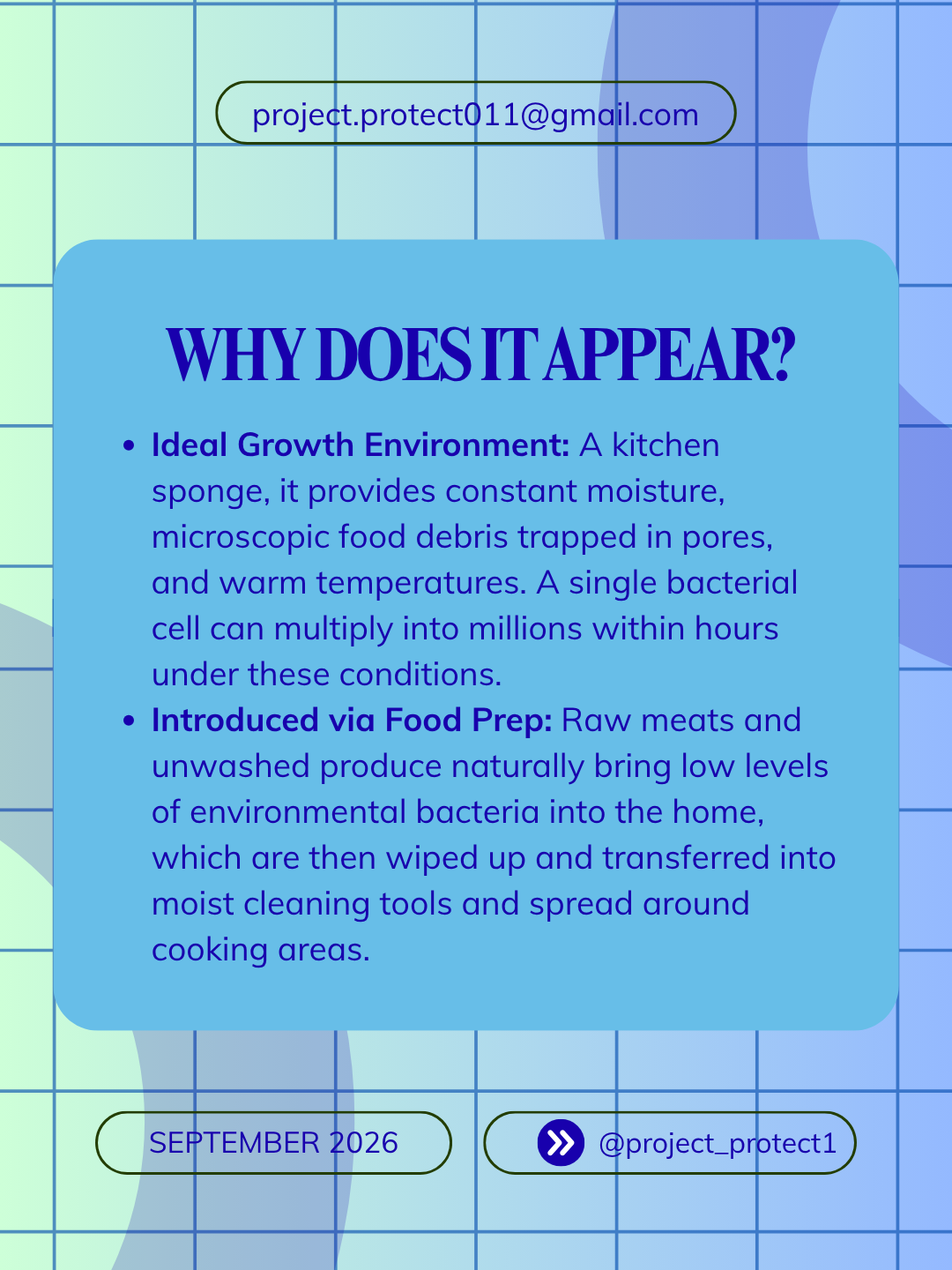
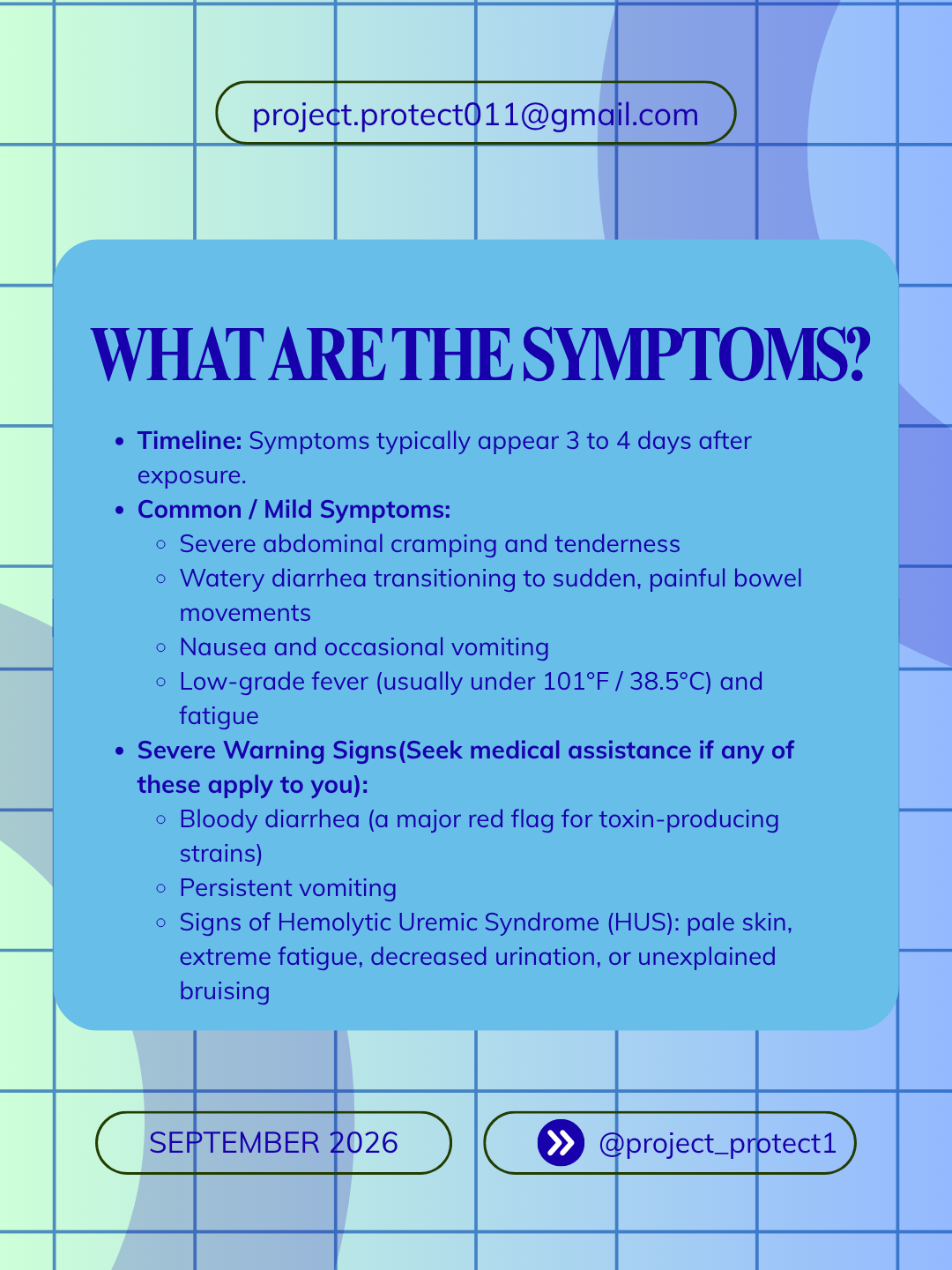
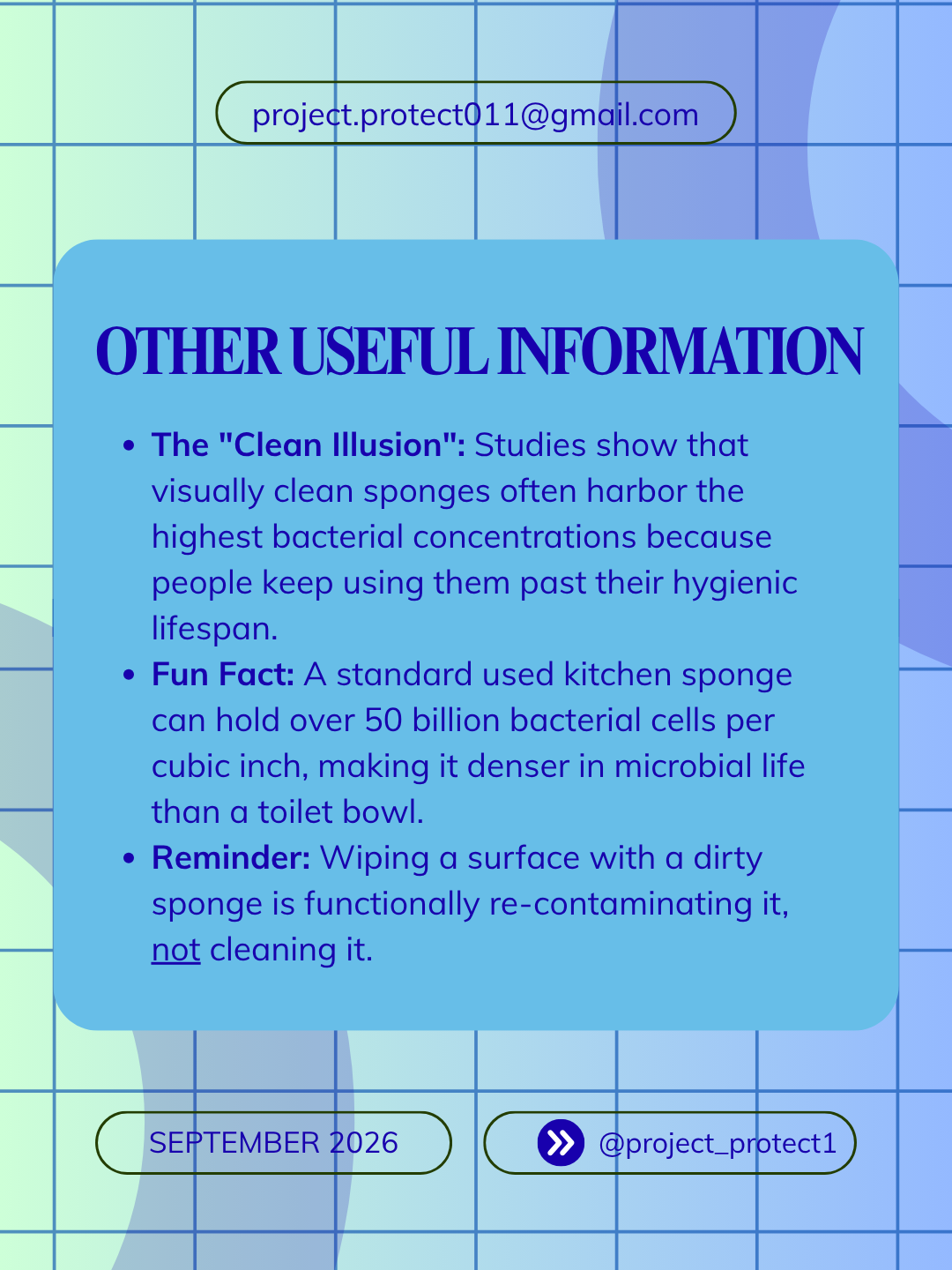
Escherichia coli (E. coli)
A closer look at where E. coli is found, why contamination happens, its symptoms, and practical prevention.

Meet the founder
Devon Striek
Founder & Writer, Project ProtectI am a high school sophomore with the goal of becoming a neurosurgeon or pediatric surgeon. Project Protect grew out of that same passion for helping people, providing a way to put genuine medical curiosity to use by making health risks easier to understand and prevent.
Get involved
Project Protect is entirely volunteer-run. If you're interested in research, writing, design, or outreach, there's a place for you here. Fill out the short application and we'll follow up by email.